Geometry Dash Levels Explained: Difficulty, Stars, Coins
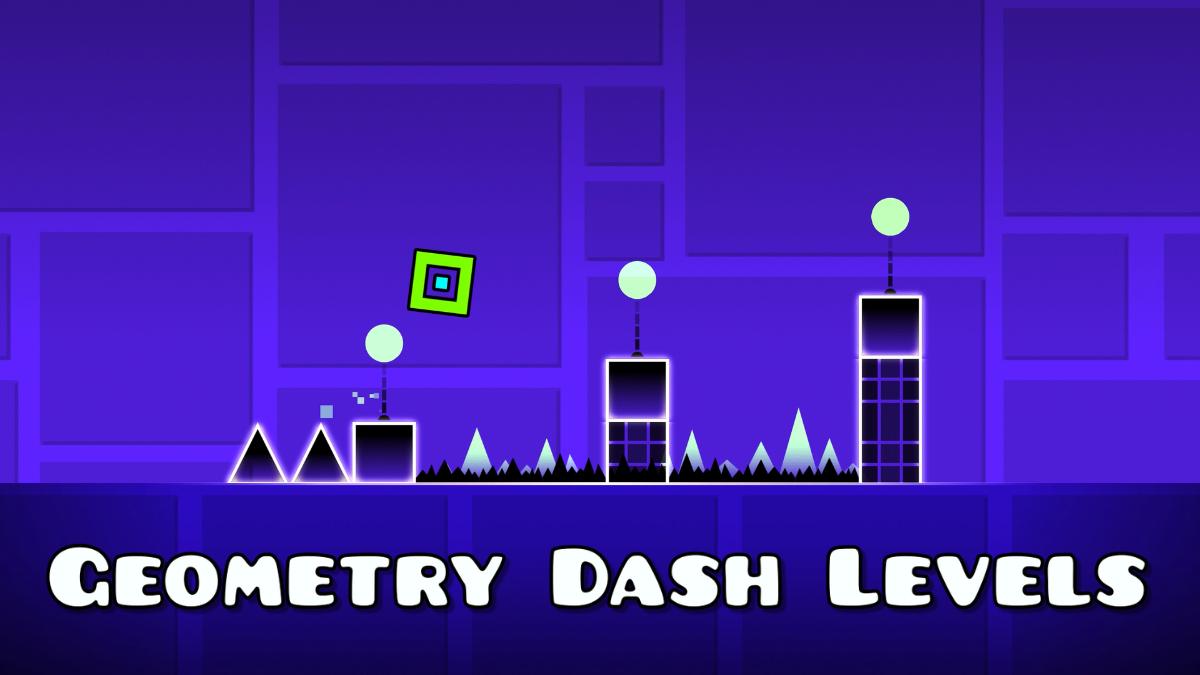
Geometry Dash levels are divided into official levels created by RobTop and community levels created by GD players. The full version currently includes 22 main official levels, plus a secret level called The Challenge, while millions of user-made levels expand the game far beyond the original campaign.
This guide covers every official Geo Dash level, how levels are organized, how difficulty ratings and stars work, and which Geometry Dash levels are best for new players.
What Are Geometry Dash Levels?
A Geometry Dash level is a rhythm-based obstacle course where your icon moves automatically and dies from a single collision. Every jump, portal, and obstacle is designed to match a soundtrack, so success depends on timing as much as quick reactions.
Every official GD level includes four core elements: a fixed song, a difficulty rating, a star reward, and three secret coins hidden throughout the level. These features give each level clear goals beyond simply reaching 100%.
Geometry Dash levels come from two sources. Official levels are created by RobTop and are built into the game, while community levels are made by players using the Level Editor. Together, these two groups create one of the largest collections of playable content in any rhythm platformer.
How Many Levels Does Geometry Dash Have?
The full version of Geometry Dash has 22 main official levels, plus a secret level called The Challenge. Beyond the main game, RobTop released three standalone versions with their own exclusive levels, while the community has created millions of additional levels through the Level Editor.
Version | Levels |
Full Version | 22 main + The Challenge |
Geometry Dash World | 10 |
Geometry Dash Meltdown | 3 |
Geometry Dash SubZero | 3 |
Community Levels | Millions |
The official campaign gives players a structured path from beginner mechanics to advanced gameplay. In contrast, the community library has grown far beyond the built-in content. New custom levels are uploaded regularly, which means the player-created collection now makes up the vast majority of Geometry Dash's playable content.
What Are All the Official Geometry Dash Levels?
The 22 official Geometry Dash levels follow a fixed order from Stereo Madness to Dash, with each level introducing a new mechanic before asking you to master it. The early levels are designed as a tutorial sequence, while later levels combine multiple mechanics into much harder challenges.
# | Level | Difficulty | Introduces |
1 | Stereo Madness | Easy | Cube basics |
2 | Back on Track | Easy | Jump pads |
3 | Polargeist | Normal | Jump orbs |
4 | Dry Out | Normal | Gravity portals |
5 | Base After Base | Hard | Faster combinations |
6 | Can't Let Go | Harder | Tighter timing |
7 | Jumper | Harder | Advanced jumps |
8 | Time Machine | Insane | Triple spikes |
9 | Cycles | Hard | Ball mode |
10 | xStep | Harder | Speed changes |
11 | Clutterfunk | Harder | Mini portal |
12 | Theory of Everything | Insane | UFO mode |
13 | Electroman Adventures | Insane | Faster transitions |
14 | Clubstep | Demon | First official Demon |
15 | Electrodynamix | Insane | High-speed gameplay |
16 | Hexagon Force | Harder | Dual mode |
17 | Blast Processing | Harder | Wave mode |
18 | Theory of Everything 2 | Demon | Advanced Wave |
19 | Geometrical Dominator | Harder | Robot mode |
20 | Deadlocked | Demon | Mixed Demon mechanics |
21 | Fingerdash | Insane | Spider mode |
22 | Dash | Harder | Swing mode |
Every official level lasts about 90 seconds and hides three secret coins that reward exploration and precise gameplay. The order is intentional. Back on Track teaches jump pads, Polargeist adds jump orbs, and Dry Out introduces gravity portals, so each level builds on the skills learned in the previous one before the game reaches its Demon-level challenges.
How Are Geometry Dash Levels Rated for Difficulty?
Geometry Dash levels use a seven-tier difficulty system that helps players understand how challenging a level is before playing it. Official levels are rated by RobTop, while community levels are reviewed by moderators before receiving a rating and rewards.
What Does Each Tier Mean?
Auto – The level completes itself without player input.
Easy – Good for beginners learning basic jumps.
Normal – Introduces simple timing challenges.
Hard – Requires more accurate jumps and faster reactions.
Harder – Tests multiple mechanics in one level.
Insane – Demands consistent timing and quick decisions.
Demon – The highest difficulty, built for experienced players.
Who Assigns the Rating?
Official levels keep the difficulty chosen by RobTop. Community levels are rated through the game's moderation system, and unrated levels do not award stars or other progression rewards.
Why Demon Is Different
Demon is divided into Easy, Medium, Hard, Insane, and Extreme Demon. Even though these sub-tiers vary greatly in difficulty, they all belong to the same top-level Demon category, with Extreme Demon representing the hardest levels in Geometry Dash.
How Many Stars Does Each Level Give?
Geometry Dash stars are the main progression reward, and the number of stars you earn depends on a level's difficulty. Easier levels give fewer stars, while every Demon level awards 10 stars, whether it is an Easy Demon or an Extreme Demon.
Difficulty | Star Reward |
Auto | 1 |
Easy | 2 |
Normal | 3 |
Hard | 4–5 |
Harder | 6–7 |
Insane | 8–9 |
Demon | 10 |
Stars do more than increase your total score. They unlock new icons, colors, achievements, and Vault content as you progress. One surprising fact is that an Easy Demon and an Extreme Demon both give 10 stars, even though the gap in difficulty between them is enormous.
What Are Secret Coins and Where Are They?
Every official Geo Dash level hides three secret coins that are usually placed behind alternate routes, hidden passages, or difficult jumps. Finding them often requires better timing and exploration than simply reaching the finish line.
Secret coins unlock new icons, colors, and certain locked content, making them valuable for progression. Collecting all three coins in a level creates a second challenge beyond beating it, turning familiar levels into puzzles with extra rewards.
What Are User-Created Levels in Geometry Dash?
User-created levels are community-built stages made in the Geometry Dash Level Editor and uploaded to RobTop's servers. They give players access to millions of custom levels with different themes, mechanics, and difficulty styles that go far beyond the official campaign.
How Are They Organized?
Community levels are grouped by length: Tiny (1–10 seconds), Short (10–30 seconds), Medium (30–60 seconds), Long (60–120 seconds), and XL (120+ seconds). They are also sorted by difficulty, popularity, and other filters.
What Is a Featured Level?
A Featured level is a community level selected by moderators for its quality, creativity, and gameplay. Featured levels receive more visibility and reward players with extra stars and other progression benefits.
Why They Matter More Than Official Levels
The official levels teach the core mechanics, but the community library is where most players spend their time. With millions of custom levels available, it has become the largest part of the Geometry Dash experience.
What Are Demon Levels?
Demon is the hardest difficulty in Geometry Dash, ranging from challenging beginner Demons to Extreme Demons that only a small number of players have completed. The three official Demon levels are Clubstep, Theory of Everything 2, and Deadlocked.
At the highest level, Extreme Demons are ranked on the community Demonlist, where the hardest verified levels compete for the top spots. For most players, beating even one Extreme Demon is a major achievement.
Which Geometry Dash Level Should You Play First?
Start with Stereo Madness and play the official levels in order. The level order is designed to teach one mechanic at a time, so each new level builds on the skills from the previous one.
For example, Back on Track introduces jump pads, Polargeist adds jump orbs, and Dry Out teaches gravity portals. Skipping ahead often leads to spam-clicking instead of learning proper timing. If you play the free versions, Geometry Dash Lite and SubZero teach the same core fundamentals before you move to harder levels.
FAQs
What Is The Hardest Official Geometry Dash Level?
Deadlocked is the hardest official Geometry Dash level. It is harder than Clubstep and Theory of Everything 2 because of its fast Wave sections, dual gameplay, and tight timing.
How Long Is A Geometry Dash Level?
Most official GD levels last about 90 seconds. Community levels can be much shorter or longer, ranging from Tiny (1–10 seconds) to XL levels that last over two minutes.
Can You Play Geometry Dash Levels In A Browser?
Yes. You can play many Geometry Dash levels in a browser through sites like GeoDash.org. However, the newest official updates and many advanced community levels are best experienced in the full game.
Do You Need The Full Version To Play User Levels?
Yes. You need the full version of Geometry Dash to access the complete user-created level library. Lite includes limited community features, but the full game gives you full access to custom levels and the Level Editor.
Closing
Geometry Dash levels are built around two experiences: a structured official campaign and a massive community library that keeps growing every day. The 22 official levels teach the game's core mechanics, while millions of user-created levels offer endless new challenges for every skill level.
Whether you start with Stereo Madness or work toward Extreme Demons, the best way to improve is to play through the official progression first and then explore the wider Geometry Dash community.